
Keeping commercial construction projects on track is important if you want to avoid costly delays, control your budget and have the space ready when you need it. In Australia, about two-thirds to three-quarters of construction projects experience schedule delays, depending on project type and data source. For large projects specifically, 37% reported delays in 2023, mainly driven by material shortages.
Having worked across commercial construction projects for years, I’ve seen that staying on schedule isn’t about hoping everything goes perfectly. It’s about planning for the issues that can throw a project off track.
Quick Takeaways
- Get the scope and planning right before construction starts.
- Order long-lead materials early.
- Coordinate trades in the right sequence.
- Keep communication clear and decisions moving.
- Monitor the programme and address delays early.
In this article, I’ll walk you through each of these five areas, explain where projects commonly lose time, and share what we do as commercial contractors to keep construction moving towards the agreed completion date.
1. A Clear Scope and Construction Plan
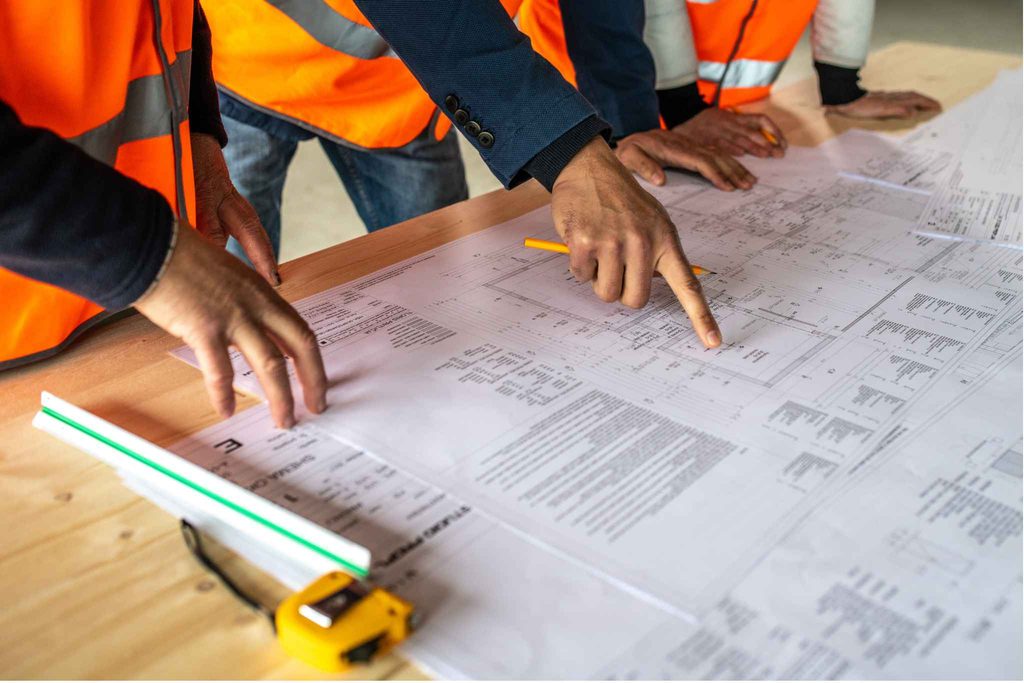
One of the best ways to keep commercial projects on track is to resolve as much as possible before construction begins.
The scope, drawings, finishes, services, budget and responsibilities should all be clearly understood by the relevant parties. If important details are still being worked out once trades are already on site, even relatively small decisions can start affecting the programme.
This is something I’ve seen repeatedly over the years. Many problems that eventually appear on site can actually be traced back to decisions that could have been made during pre-construction.
Research backs this up. Studies examining construction delays consistently identify poor planning and scheduling, design changes, unclear client requirements and slow decision-making among the common causes of project delays.
This is particularly important for commercial renovations, fitouts and existing buildings, where site conditions, business operations, existing services and approvals can add another layer of complexity.
For commercial fitouts in WA, for example, we recommend confirming the intended use, approval pathway, landlord requirements, services and key compliance requirements before site works begin. You can read more in our guide to commercial fitout approvals in WA.
My advice: spend more time getting the project clear before you start. A week spent resolving questions during pre-construction can be much easier to manage than having those same questions arise when trades are already booked and working on site.
2. An Early Procurement Strategy
Good planning doesn’t stop with the construction programme. Procurement needs its own timeline.
Some products and equipment can take weeks or months to manufacture and deliver. Depending on the project, this might include specialist doors, glazing, switchboards, mechanical equipment, joinery and particular finishes.
This remains relevant in the Australian market. Infrastructure Australia has identified international supply-chain disruption, shortages and delays as an ongoing delivery risk and has specifically highlighted equipment and materials exposed to long lead times.
More recently, the May 2026 Australian Construction Market Report noted that materials are broadly available, but shipping disruption continues to create lead-time variability for imported and long-lead components.
That’s why we try to identify critical items early, confirm selections, and place orders according to when they’ll actually be needed on site.
We saw the value of this on one of our own time-sensitive projects. Knowing that the programme would run into the holiday period, our team pre-ordered materials to reduce the risk of holiday-related delays. That project also involved coordinating more than 50 stakeholders, so procurement couldn’t be left until the last minute. You can see the project in our commercial construction case studies.
My advice: don’t wait until you need something on site to start thinking about ordering it. Identify anything with a long or uncertain lead time during pre-construction and build procurement into the programme to keep commercial projects on track.
3. A Well-Coordinated Trade Schedule
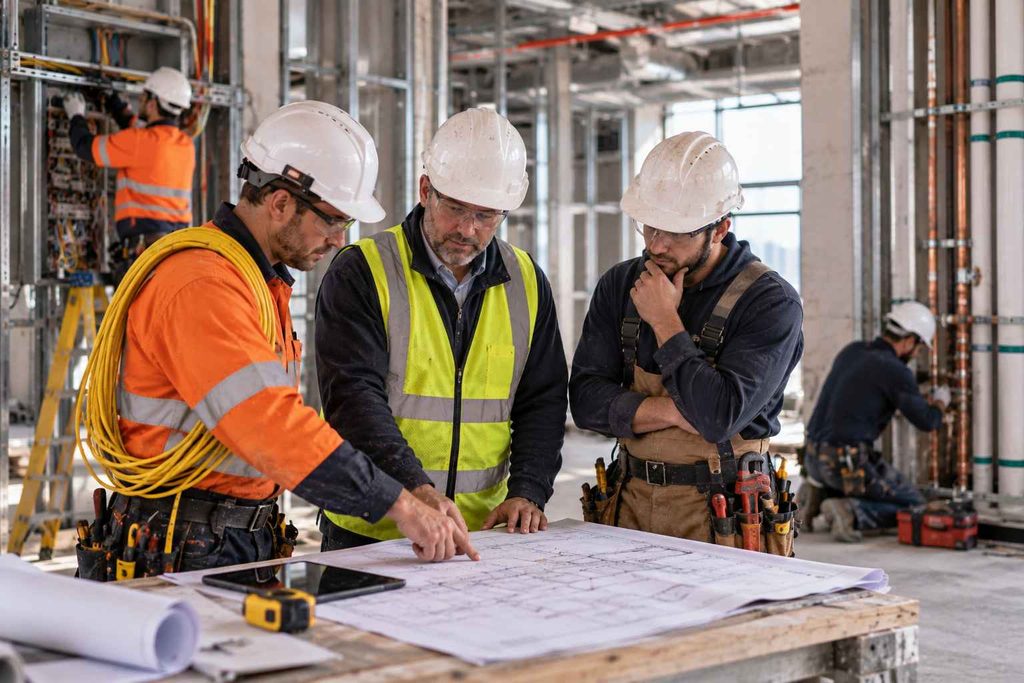
A commercial construction site can have many different trades moving through it over the course of a project.
The important thing isn’t simply having everyone working at once. It’s having the right trade on site at the right time.
Electrical, plumbing, mechanical, ceilings, carpentry, flooring, painting and other works often depend on activities being completed before the next trade can begin.
Poor coordination can result in subcontractors waiting around, completed work having to be reopened or activities further down the programme being pushed back. Research into construction delays has similarly identified poor planning, scheduling, site management and coordination between project parties as recurring contributors to delays.
This is where the builder’s project management systems become important.
To keep commercial projects on track, we’re not simply organising individual trades. We’re coordinating subcontractors, consultants, materials, inspections, safety, access, sequencing and the overall programme so those individual parts come together in the right order. That’s particularly important when construction is happening inside an operating business.
My advice: don’t judge progress by how many people you can see on site. A busy site isn’t necessarily an efficient site. What matters is whether the work is happening in the right sequence and moving the project towards the next milestone.
4. Clear Communication and Decision-Making
Even the best construction programme can be affected by slow communication.
Questions will come up during a project. A drawing may need clarification, an unexpected site condition might require a decision, or a product may need approval before it can be ordered.
What matters is how quickly those questions move between the builder, client, architect, consultants and subcontractors.
There is good evidence for this. A study analysing 53,042 RFI events across 168 construction projects in Australia and New Zealand found that larger and more complex projects tended to generate more RFIs and longer turnaround times. The researchers specifically highlighted the importance of managing RFI turnaround effectively.
A more recent review of RFI management also identified poorly managed information requests as a potential source of schedule delays and increased project costs.
From the builder’s side, this means having clear lines of communication and making sure the right person can make a decision when one is required. Our own approach to commercial fitouts is to provide clients with a single point of contact while coordinating the individual stages and trades behind the project.
My advice: problems don’t always cause delays by themselves. Sometimes it’s the three or four days spent waiting for an answer that creates the bigger problem.
5. A Proactive Programme Management
A construction programme shouldn’t be prepared at the beginning of a project and then forgotten.
Experienced contractors continually compare actual site progress against where the project should be.
If something starts falling behind, the project team can assess what it affects next and determine whether labour, sequencing, procurement or upcoming activities need to be adjusted.
This is also consistent with established project management practice. The Project Management Institute’s scheduling guidance treats an effective schedule as something that needs to be planned, developed, maintained, communicated and reported on throughout the project, rather than simply created at the beginning.
At Chest Constructions, we take a similar view. Structured reporting, programme tracking, defined communication channels and clear project leadership are some of the things I recommend clients look for when choosing a commercial builder in Perth.
The earlier you identify that something is slipping, the more options you generally have to do something about it.
My advice: don’t wait until a project is obviously behind schedule to ask why. Good programme management is about spotting the warning signs early and dealing with them while you still have room to respond.
Keep Your Commercial Construction Projects on Track
Keeping a commercial construction project on schedule comes down to good preparation, early procurement, well-coordinated trades, clear communication, and staying on top of the programme throughout the build.
You can’t plan for every issue that might arise, but an experienced contractor should be able to identify risks early and keep the project moving when challenges come up.
Planning a commercial construction, renovation or fitout in Perth? Contact Chest Constructions to discuss your project with our experienced commercial construction team.
Frequently Asked Questions
1. What are the most common causes of commercial construction delays?
Common causes include incomplete planning, late design changes, material and equipment delays, poor trade coordination, approval delays, and slow decision-making during construction.
2. How can you keep a commercial construction project on schedule?
Start with a clearly defined scope, identify long-lead items early, coordinate trades carefully, maintain clear communication and regularly monitor progress against the construction programme.
3. Why is pre-construction planning important?
Pre-construction planning helps identify potential problems before work begins. It also gives the builder, client and consultants an opportunity to clarify the scope, drawings, approvals, materials and responsibilities.
4. How do material lead times affect a construction programme?
If a critical material or piece of equipment arrives late, the trades relying on it may be unable to continue. Identifying and ordering long-lead items early can reduce the risk of procurement delays affecting the wider programme.
5. What should I look for in a commercial contractor to help avoid delays?
Look for a contractor with strong project management, clear communication, reliable subcontractor relationships and experience delivering similar commercial projects. They should also have systems for managing procurement, sequencing trades and tracking the programme throughout construction.