

If you’re planning a commercial fitout in WA, understanding fire compliance is critical.
In this guide, I’ll break down the common reasons fire inspections fail, how to avoid rework, and what you need to have ready before your inspection. It’s about being prepared upfront, not scrambling at the last minute.
Quick takeaways
- Key Compliance Areas: Exits, fire-rated elements, alarms, emergency lighting, and service changes are the main areas of focus for fire compliance.
- Avoid Delays: The most significant issues often arise before the inspection, not during it.
- Older Buildings: Watch out for hidden fire-related issues that might not show up until you start the fitout.
- Plan Ahead: Clear drawings, early reviews, and staged checks help to prevent unnecessary redesigns and delays.
In simple terms, fire compliance ensures that your fitout supports safe exits, effective fire detection and containment, and doesn’t create any hazards when the space is occupied. This can include:
What is Fire Compliance in a Fitout?
- Exits and travel paths
- Fire-rated walls and doors
- Service penetrations
- Emergency lighting and exit signage
- Fire detection and alarms
- Coordination with existing fire systems
It’s not about redesigning everything; it’s about making sure any layout or service changes are checked early so you don’t get caught out later.
For official WA process information, it is worth reviewing Building and Energy’s building approvals guidance and the DFES Built Environment Branch, especially where fire-related elements are affected.
Why Fitout Fire Inspections Fail
Fire inspections are critical to the success of any commercial fitout, yet they often fail for reasons that could have been prevented with early planning and coordination. Here are the most common causes of failure and how to ensure a smooth inspection process:
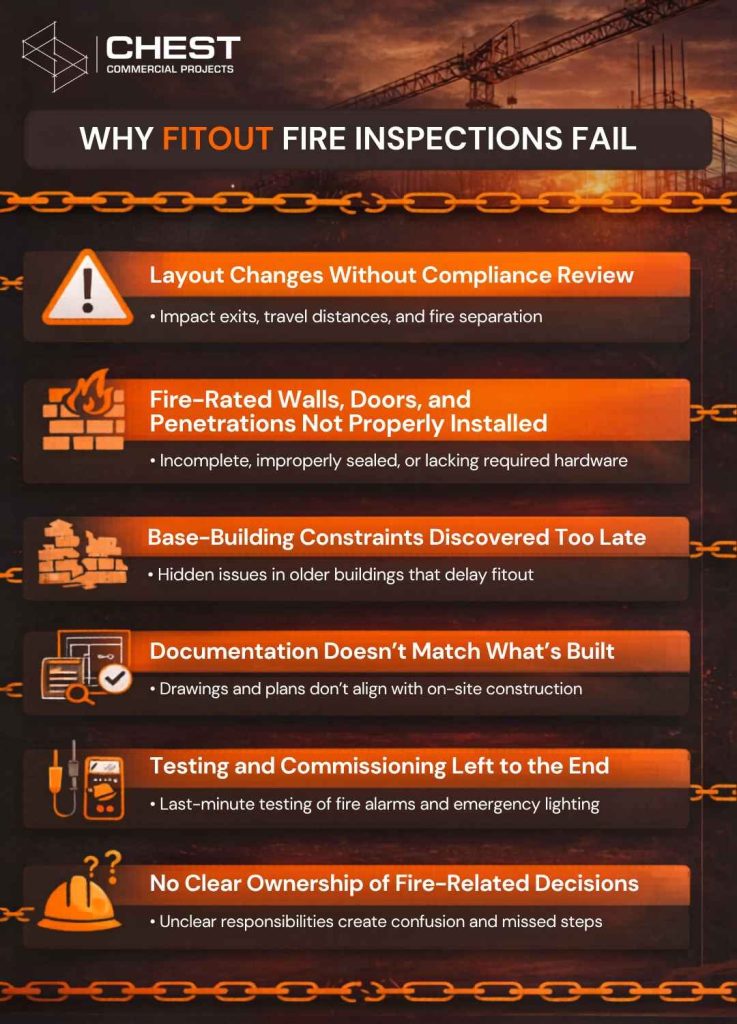
1. Layout Changes Without Compliance Review
A simple layout revision can impact exits, door swings, travel distances, fire separation, or how people move through the tenancy. These changes can drastically affect compliance without the right checks in place.
Fix:
It’s essential to review fire impacts before making any layout changes, not after construction has begun. While layout adjustments can seem like minor updates, they can have a significant impact on fire safety. Work with your team to conduct a comprehensive review early on, ensuring that the new design complies with fire regulations. Having this review before finalising plans helps avoid costly rework later.
Pro Tip:
Set aside time for staged design reviews where fire safety is specifically assessed. This process will not only ensure compliance but also save time by preventing last-minute revisions.
2. Fire-Rated Walls, Doors, and Penetrations Not Properly Installed
One of the most common issues is improper treatment of fire-rated elements like walls, doors, and penetrations. Often, these features are incomplete, not sealed properly, or lack the necessary hardware.
Fix:
Treat fire-rated walls, doors, and penetrations as an integral part of the build sequence, not as last-minute fixes. It’s important to integrate fire compliance into every stage of construction. For example, ensure that all fire-rated elements are completed in the early phases of the project, allowing for thorough inspections before sealing walls or covering doors.
Pro Tip:
Fire-rated elements should be on a checklist throughout construction. Any issues should be flagged and resolved as soon as possible. Don’t wait until the end of the build to address them.
3. Base-Building Constraints Discovered Too Late
Older buildings often have undocumented issues that only become apparent once the fitout starts. These hidden challenges could be anything from outdated fire systems to unexpected structural limitations.
Fix:
Inspect the existing building conditions early to fully understand what you’re working with. Engage in a detailed review of fire systems, ceiling spaces, and any potential issues that could affect your fitout. The earlier you identify these challenges, the easier it will be to navigate them without disrupting the project timeline.
Pro Tip:
Work with your team to audit base-building conditions before finalising your design. This will give you a clear idea of what can be changed and what will require more attention during the fitout.
4. Documentation Doesn’t Match What’s Built
Inconsistent documentation can cause significant delays and confusion during the inspection process. When the drawings, reflected ceiling plans, and services layouts do not align with what is built on-site, it makes the inspection process unnecessarily complicated.
Fix:
Keep one coordinated set of current documents and control all changes meticulously. This helps ensure that the construction team is building according to the latest approved plans, and the documentation matches the final construction at every stage.
Pro Tip:
Implement a document control system where all parties (designers, builders, and contractors) work from the same approved, up-to-date documents. This prevents errors caused by outdated or inconsistent plans.
5. Testing and Commissioning Left to the End
Sometimes, testing and commissioning are rushed or overlooked until the very last minute. By this time, the physical work may look complete, but critical systems like fire alarms or emergency lighting may still require testing.
Fix:
Plan for testing and commissioning well ahead of the final inspection. This includes booking necessary tests early in the process, ensuring that fire alarms, emergency lighting, and other systems are properly installed and functioning before the final inspection.
Pro Tip:
Don’t wait until the end of the project to start testing. Instead, schedule staggered testing as you complete major phases of the fitout. This ensures that you’re not scrambling to complete essential checks at the last minute.
6. No Clear Ownership of Fire-Related Decisions
Fire compliance responsibilities can often be passed around between tenants, landlords, designers, builders, and contractors, leading to confusion and missed steps.
Fix:
Clearly define who is responsible for each fire-related decision from the start. Having a point person for fire-related matters ensures accountability and that nothing falls through the cracks. This includes ensuring that fire systems are properly designed, implemented, and tested.
Pro Tip:
Establish a fire compliance lead at the beginning of the project. This individual should manage fire-related decisions, coordinate with all parties involved, and oversee compliance efforts from design through to completion.
By understanding these common causes of fire inspection failures and implementing these fixes early on, you can avoid delays, costly rework, and ensure a smoother path to compliance. Remember, fire inspections don’t have to be stressful if you’re prepared and proactive.
What should be reviewed early to avoid redesign?
1. Existing Building Conditions
Before the design is finalised, you need a clear understanding of the current building’s condition. This allows you to spot potential fire compliance issues that could throw off your design.
- Current Exits and Exit Paths: Check that existing exits remain suitable for the new layout to avoid obstructing critical paths.
- Existing Fire-Rated Walls and Tenancy Boundaries: Review older fire-rated elements to prevent surprises during construction.
- Ceiling Space and Services Congestion: Assess ceiling space early to avoid space restrictions from existing services.
- Existing Alarm and Emergency Lighting: Ensure the fire alarm and emergency lighting systems align with the fitout, and plan upgrades if needed.
- Base-Building Limitations and Landlord Requirements: Identify hidden limitations in older buildings early to adjust the design accordingly.
- Signs of Previous Work Without Proper Documentation: Spot undocumented changes from previous tenants to avoid costly fixes later.
2. The Fitout Scope Itself
Once you have a clear picture of the existing conditions, it’s time to assess how your proposed fitout might change the space.
- How the Tenancy is Occupied: Any changes in space usage or occupancy need to be considered for fire safety planning.
- Internal Layout Changes That Affect Egress: Even minor layout changes can impact exits or fire-rated barriers. Review these early to avoid costly fixes.
- Fire-Rated Construction and Door Locations: Ensure any alterations to fire-rated elements meet compliance requirements before construction starts.
- Services Routes Through Rated Elements: If running services through fire-rated walls or ceilings, review early to ensure compliance and avoid conflicts.
- Ceilings, Bulkheads, and Access to Existing Fire Systems: Coordinate ceiling or bulkhead work with fire-rated elements and ensure access to fire systems.
3. The Approval and Sign-Off Pathway
While this guide focuses on fire compliance readiness, remember that the broader approvals process is equally important. If you haven’t already, make sure you:
- Understand the WA Commercial Building Rules: Ensure your fire compliance plan aligns with the broader approvals framework by familiarising yourself with the building rules and required documentation. Read more about it here: WA commercial building rules guide.
- Coordinate with the Authorities: Seek approval early to avoid last-minute issues. Building and Energy, along with DFES, can guide you on the requirements for approvals. You can explore how we approach commercial fitouts in Perth or go back to our WA commercial building rules guide for the wider compliance picture.
Table 1. Useful checklists to consider.
| Pre-inspection checklist | Site readiness checklist | Coordination checklist |
| Current architectural layout drawings
Reflected ceiling plans, where relevant Services drawings that match the latest scope Any fire-related marked-up details that explain what changed Product and system details where compliance depends on specific components Landlord or base-building approvals, where required A simple issues list showing what is complete, what is pending, and who owns each item |
Exits are clear and usable Fire doors are installed, fitted, and operating properly Penetrations are completed, not left open for later Emergency lighting and signage are installed where required Ceilings and access panels are finished enough for checking relevant items Site changes have not drifted away from the approved documentation Defects are being tracked and closed, not verbally noted and forgotten |
Designers, builders, surveyors, and specialist contractors are working from the same current set of information
Landlord or base-building approvals are aligned with the tenancy scope Inspections are staged at the right points, not just at the very end Testing is booked early enough to avoid programme blowouts |
Final Thoughts
At Chest Constructions, we’ve been guiding clients through the complexities of commercial fit-outs across Perth and regional Western Australia for years. Fire compliance is a critical part of the fit-out process, and from experience, we know that most inspection failures are preventable with early planning, thorough documentation, and clear ownership.
We take a disciplined approach to fire safety, integrating comprehensive planning, site reviews, and staged inspections under one accountable framework. Our focus is on ensuring fire-rated elements are treated early, layouts are assessed for fire safety impacts, and testing is scheduled in advance to avoid any last-minute issues.
If you’re navigating the fire compliance requirements for your fit-out and need guidance on risk management, documentation, or the approval process, I’d welcome the opportunity to discuss your project.
Fire safety is not just about compliance; it’s about protecting your investment and ensuring a smooth path to completion. Contact us today to discuss your fit-out requirements and receive expert advice to help you avoid common pitfalls and achieve a successful inspection.
FAQs
Why do fit-out fire inspections fail?
Most fail because of documentation gaps, coordination misses, incomplete fire-rated details, or testing and close-out items that were left too late.
What should be reviewed early to avoid redesign?
Review the layout, exits, rated construction, service routes, ceiling space, existing building constraints, and any landlord or base-building requirements before the design is treated as locked.
Does every fitout involve fire-related checks?
Not every fitout triggers the same level of fire compliance work, but many do affect at least one fire-related element. If the fitout changes walls, ceilings, doors, exits, or services, check the fire impacts early.
What documents should I have ready before inspection?
Have current drawings, coordinated services information, relevant fire-related details, approvals that affect the scope, and any available testing or contractor close-out records ready before inspection.
How do older buildings affect fire compliance risk?
Older buildings can carry undocumented conditions, legacy systems, limited ceiling space, and inherited defects. These issues often create a redesign or site rework if they are not identified early.