
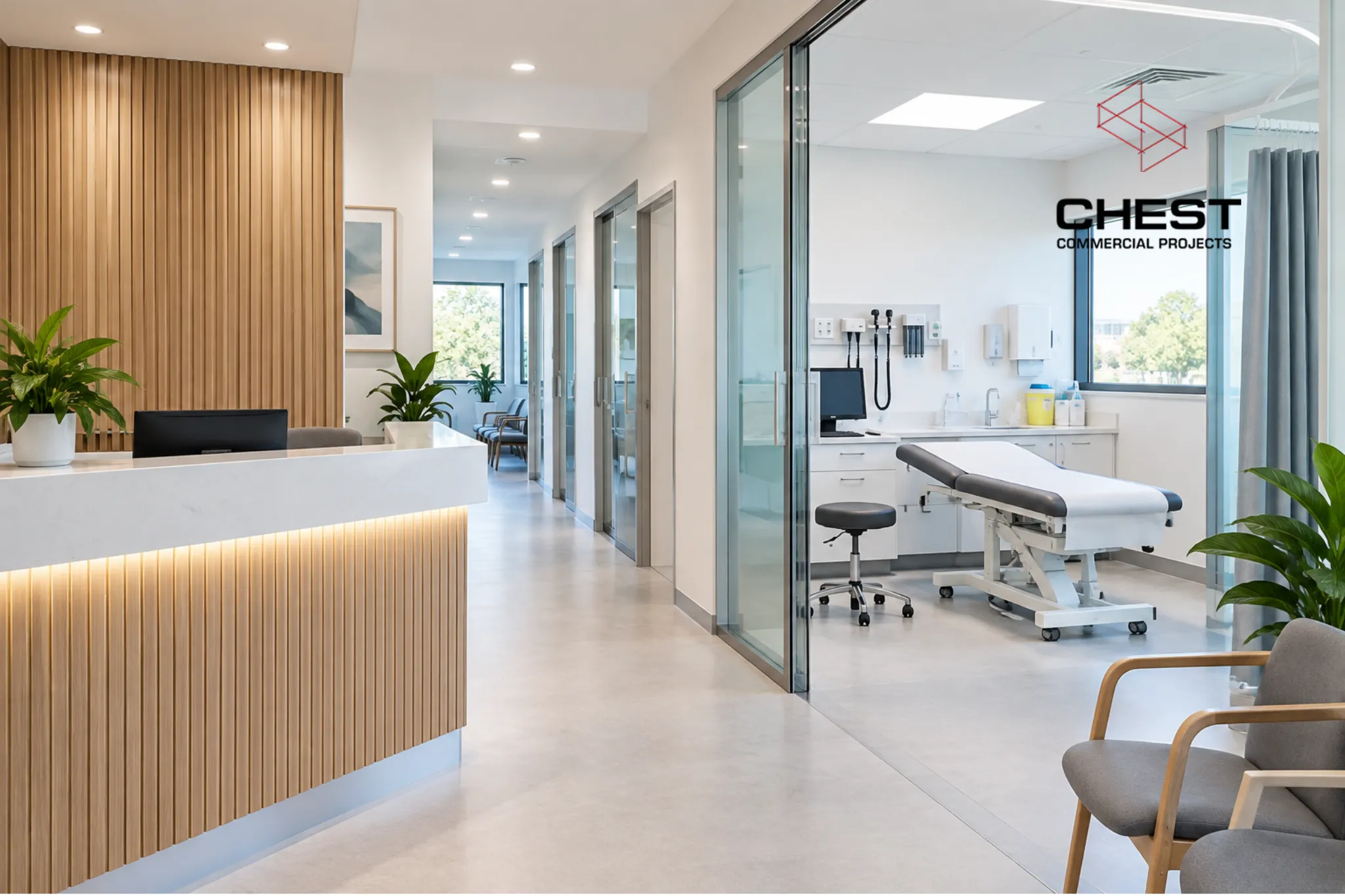
Perth’s private medical, cosmetic, and wellness clinic sector is booming, part of a broader surge in WA health infrastructure investment that’s reshaping the city. But while demand for compliant, clinically-functional fitouts is rising fast, the number of builders who actually understand what a medical fitout requires hasn’t kept pace.
In this guide, we’ll break down what AHPRA expects from a fitted-out space, the infection control standards shaping your floor plan, and the layout traps that turn a simple fitout into a costly rework. It’s about designing compliance from the start, not discovering it at inspection.
Quick Takeaways
- The Market Is Growing, The Specialists Aren’t: Perth’s medical and wellness clinic sector is expanding, but few builders have genuine medical fitout experience.
- AHPRA Doesn’t Certify Buildings, But It Certifies Practitioners In Them: Registration standards, infection control guidelines, and WA Health regulations all converge on the physical space.
- Infection Control Drives The Floor Plan: Clean-to-dirty workflow, hand hygiene stations, and sterilisation zoning are the starting point of design, not finishing touches.
- Change of Use Triggers Bigger Obligations: Converting retail or office space into a medical clinic can escalate NCC, ventilation, and accessibility requirements.
Does AHPRA Actually Approve or Inspect Medical Fitouts?
No. AHPRA regulates practitioners, not premises, but the standards it holds practitioners to (infection control, patient privacy, clinical governance) are shaped by the physical space, so a non-compliant fitout can still become a registration issue.
There’s no AHPRA fitout inspector who turns up with a clipboard. But AHPRA’s registration standards for various professions (cosmetic injectors, nurses, doctors) reference infection prevention and control guidelines, most commonly the ACSQHC’s Infection Prevention and Control Guidelines, alongside WA Department of Health requirements. If a complaint is lodged, or a practitioner is audited, the suitability of the physical environment can become part of that conversation.
In Western Australia, certain facilities, such as day procedure centres, for example, fall under the Health Services Act 2016 (WA). Cosmetic clinics performing higher-risk procedures may sit closer to this threshold than owners expect.
What this means in practice:
- Your fitout must satisfy the National Construction Code and the local council for building approval
- It must also support the infection control and clinical governance standards relevant to the procedures performed
- A builder who only addresses the first point leaves the practice owner exposed on the second point
What Infection Control Standards Actually Mean for the Floor Plan
Infection control requirements determine room zoning, plumbing locations, surface finishes, and waste routes, all of which need to be locked in before construction starts, not retrofitted afterwards.
This is where most generic commercial fitouts fall short, because infection control isn’t a finishing layer you add at the end. It’s a workflow designed into the bones of the space.
The core requirements:
- Clean-to-dirty separation — instruments and consumables move in one direction: sterile storage → use → decontamination → disposal, without crossing back over a clean pathway. See the ACSQHC’s guidance on reprocessing.
- Hand hygiene stations at point-of-care — within or adjacent to each treatment room, per Hand Hygiene Australia’s standards, not just in a shared bathroom down the hall.
- Non-porous, wipeable, seamless surfaces — coved skirting (floor curving into the wall rather than meeting at a right angle) eliminates dirt traps. Carpet, fabric upholstery, and open-jointed timber in clinical zones are red flags.
- Dedicated sterilisation and storage zoning — a ventilated space for autoclaves, separate from clean stock and separate again from waste.
- Clinical waste routes — planned at design stage, especially in strata buildings with shared loading areas. WA’s handling rules fall under DWER waste regulations.
What’s the Right Size for a Treatment Room?
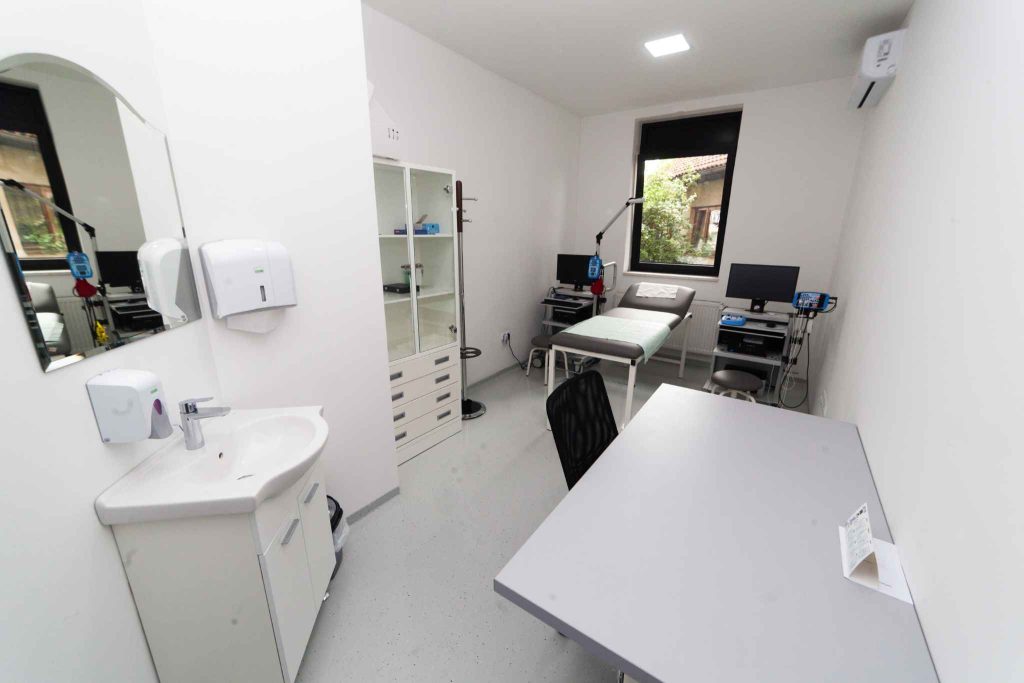
There’s no single mandated minimum, but most cosmetic treatment rooms need at least 9-10 square metres to comfortably fit the chair, clinician movement space, hand hygiene station, and sharps disposal.
A treatment room needs to:
- Fit the bed or chair with room to move on at least two sides (more if assistants are involved)
- Accommodate trolleys or equipment specific to the procedure
- Leave space for a hand hygiene station and sharps disposal without feeling cramped
- Allow for additional equipment likely to be added within the next 1-2 years
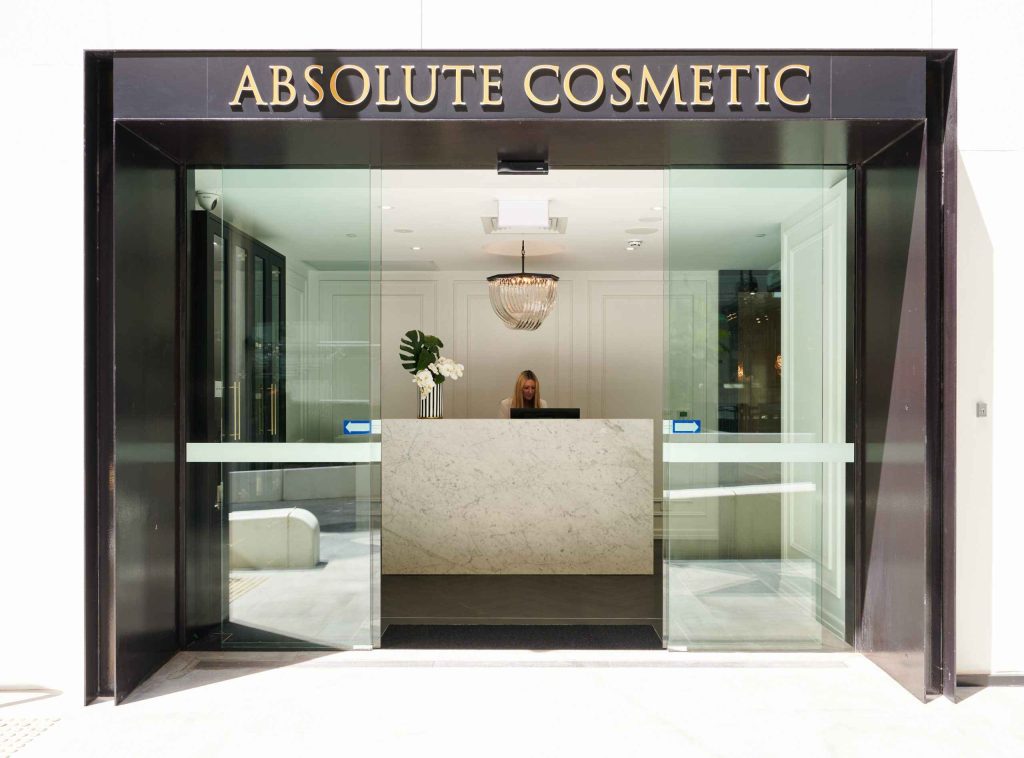
The mistake we see most often isn’t rooms too small from the outset, it’s rooms sized correctly for the original brief, and then a new piece of equipment or service line gets added eighteen months later. Where possible, we design in flexibility, even if it’s just leaving a wall un-fixed with services, so future changes don’t mean ripping back to brick. (Our Absolute Cosmetic case study is a good example of this in action.)
Does My Clinic Need an Accessible Toilet and Accessible Parking?
Almost certainly yes. The NCC Part D, AS 1428.1, and the Disability (Access to Premises) Standards 2010 all apply to commercial fitouts in WA, and medical clinics, given their patient demographics, are held to these closely.
Three areas that trip up medical fitouts specifically:
- Accessible parking — ACROD bays must comply with AS/NZS 2890.6, including shared space requirements, signage, and a direct accessible path to the building. Many tenancies were designed under the pre-2009 standard and don’t meet current requirements.
- Accessible sanitary facilities — depending on tenancy size and building class, an accessible toilet may be a condition of fitout approval, not optional.
- Path of travel — must be continuous and compliant from the accessible bay, through entry, to reception, treatment rooms, and accessible toilet. A great treatment room behind a step with no ramp won’t get signed off.
For a deeper breakdown, see our full guide to accessibility requirements for WA commercial fitouts.
Will Converting My Premises to a Medical Use Trigger Extra Requirements?
Yes. Changing a tenancy’s use, e.g., retail to medical, can trigger NCC reclassification, which brings new requirements for fire separation, ventilation, and accessibility, even if the physical works look minor.
Under the NCC, different building classifications carry different requirements for fire separation, ventilation, accessibility, and structural fire ratings. A space compliant as a retail shop (Class 6) may need additional work for its new use as a health care facility.
Why this catches owners out:
- A “minor” fitout (new partitions, flooring, extra power points) can suddenly require fire engineering reports or upgraded ventilation
- The City of Perth and other councils assess the development application against the proposed use, not the previous one
- WA Health may have separate notification or licensing requirements depending on the procedures planned
Bottom line: get your builder and a building surveyor involved at the lease-negotiation stage, before you sign. It can materially change which tenancy makes financial sense.
What Ventilation and Air Quality Standards Apply to Treatment Rooms?
Ventilation is one of those requirements that’s easy to overlook because it’s invisible once the ceiling is closed in, but it has real implications for both compliance and day-to-day clinical practice.
Treatment rooms where aerosols, chemical agents, or sterilisation equipment are used generally need mechanical ventilation that meets minimum air change requirements under the NCC and the AS 1668 series for mechanical ventilation in buildings. For rooms where an autoclave or chemical disinfectants are in regular use, exhaust ventilation that doesn’t simply recirculate air into the rest of the clinic matters for both staff health and infection control.
This is squarely in “design it in early” territory. Ductwork, exhaust fans, and make-up air paths need to be planned before ceiling and wall linings go up. We’ve seen projects where ventilation was treated as an afterthought, and the fix involved opening up finished ceilings across multiple rooms, an expensive and disruptive lesson.
Why Is It So Hard to Find a Builder Who “Gets” Medical Fitouts in Perth?
Honestly, because most builders never need to. The vast majority of commercial fitout work in Perth is retail, office, and hospitality spaces, where the worst-case outcome of a design oversight is an awkward layout or a council comment letter.
Medical and cosmetic fitouts are different. The worst-case outcome of an oversight is a clinic that can’t open on schedule, a practitioner whose registration is questioned, or a space that has to be partially rebuilt because a treatment room can’t accommodate the equipment it was designed around. That’s a different risk profile, and it requires a builder who’s actually solved these problems before.
As Perth’s wellness, cosmetic, and allied health sector continues to grow, the gap between demand for these fitouts and the supply of builders who can deliver them properly is only becoming more obvious. For clinic owners, the practical implication is to vet your builder on medical-specific experience, not just a general commercial fitout portfolio.
How Early Should I Involve My Builder in the Design Process?
As early as possible, ideally before you’ve signed a lease.
The pattern we see across medical fitouts is consistent: projects that bring in an experienced builder at the concept stage tend to land on budget and on program, because the floor plan is shaped around real compliance requirements from day one. Projects that finalise a “nice” floor plan first and then ask a builder to make it compliant tend to discover expensive problems, room sizes that don’t work once services are added, accessible paths that don’t quite reach, and ventilation that needs structural changes to install.
A builder with genuine experience in medical and cosmetic fitouts will be asking questions during the design phase that a generalist commercial builder simply won’t think to ask: where’s your sterilisation going, what’s your waste collection arrangement, how many treatment rooms might you add in two years, what’s your patient flow from waiting room to consult to treatment and back out.
Chest Construction: Built for Medical and Cosmetic Fitouts in Perth
This is the exact gap Chest Construction works in every day, the space between “looks great on the plans” and “actually works for a clinic, passes its approvals, and holds up under real clinical use.”
Our work with Absolute Cosmetic is a good example of what this looks like in practice. The fitout needed to balance a polished, premium client experience in the front-of-house areas with treatment rooms that met the practical demands of infection control, equipment layout, and clinical workflow, all within a tenancy that had its own existing constraints to work around. The result is a space that functions as well behind the scenes as it looks from the front desk.
More recently, our project with Akana Wellness Centre in Mount Lawley brought together many of the considerations covered in this guide: treatment room sizing that allows for current services and future flexibility, infection control-conscious finishes and zoning, and an accessible, welcoming path from arrival through to treatment, fitting for a wellness practice serving a broad cross-section of the Perth community.
If you’re planning a medical, cosmetic, or allied health fitout in Perth, whether starting with a bare shell, converting an existing tenancy, or upgrading a clinic that’s outgrown its current layout, the earlier we’re involved, the more value we can add. Get in touch with Chest Construction to talk through your project before you finalise your floor plan, it’s the easiest way to make sure compliance is built in, not bolted on.
Frequently Asked Questions
- Does AHPRA inspect or certify medical fitouts in WA?
No. AHPRA regulates practitioners, not premises, but infection control and clinical governance standards it enforces are directly shaped by the physical space.
- What’s the minimum size for a cosmetic treatment room in Perth?
There’s no fixed legal minimum, but around 9-10 square metres is typically needed to fit a treatment chair, clinician movement space, and hand hygiene station comfortably.
- Do I need an accessible toilet for a small clinic fitout?
Depending on tenancy size and building classification, it may be a condition of fitout approval under the NCC and Disability (Access to Premises) Standards 2010.
- Does converting a shop into a medical clinic require council approval in Perth?
Yes. A change of use from retail to health care can trigger NCC reclassification, requiring a fresh development application assessed against the new use.
- What ventilation standard applies to treatment rooms using sterilisation equipment?
The AS 1668 series governs mechanical ventila