
If you’ve been around construction long enough, you know commercial construction safety tips aren’t just recommendations; they’re an essential part of doing the job properly. Safety should never be compromised when workers, subcontractors, and the public could be at risk.
Quick Takeaways
- Planning matters: Many site risks can be identified and controlled before construction begins.
- Safety goes beyond PPE: Training, communication, site procedures and supervision all play an important role.
- A safer site can mean a smoother project: Preventing incidents helps reduce downtime, disruptions and avoidable delays.
- Choose your builder carefully: Look for a commercial construction team that treats safety as part of how the project is managed, not as an afterthought.
In 2024, 188 Australian workers lost their lives due to traumatic workplace injuries. Construction accounted for 37 of those deaths, around 20% of the national total. The fatality rate in construction was 2.8 deaths per 100,000 workers, more than double the all-industry average of 1.3.
The non-fatal figures are just as concerning. In 2023–24, construction accounted for approximately 17,600 serious workers’ compensation claims, roughly 35 serious injury claims every day.
I’ve worked in construction for years, and one thing I’ve learned is that a safer site doesn’t happen because someone puts up a few signs and hands everyone PPE. It starts well before anyone picks up a tool.
That’s why I’ve put together these 10 practical safety tips for commercial construction projects in Australia to help you understand what should be happening on your site and what to look for when choosing the team responsible for delivering your project.
Top 10 Safety Tips for Commercial Construction in Australia
#10. Prepare a SWMS Before Starting High-Risk Work
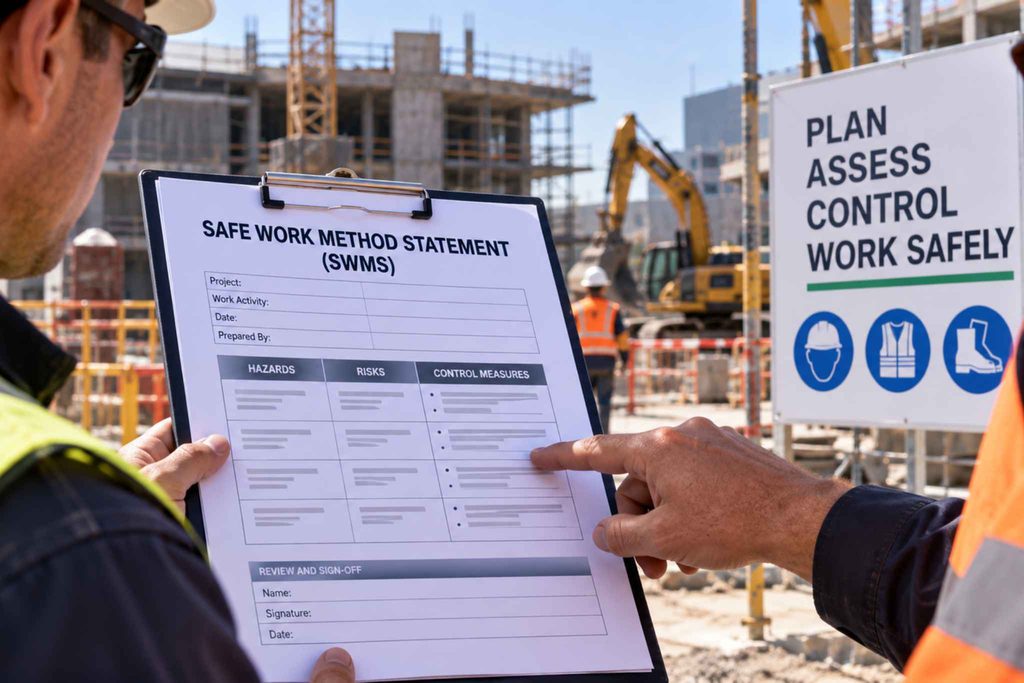
A Safe Work Method Statement (SWMS) isn’t just paperwork. It’s an important part of managing high-risk construction work safely. Before work begins, the SWMS should clearly identify the hazards, risks and control measures so everyone on site understands how the job needs to be carried out. Safe Work Australia outlines when a SWMS is required and what it should cover. This can include work involving a risk of falls over two metres, trenches deeper than 1.5 metres, demolition of load-bearing structures, work near energised electrical services and areas where powered mobile plants are operating.
At Chest Constructions, we believe the best approach is to identify risks early rather than deal with problems once work is underway. Proper planning, clear communication and site-specific safety procedures are all part of delivering a safer, smoother commercial construction project.
#9. Ensure All Workers Have a Valid White Card
No one can perform construction work on an Australian site without a current White Card confirming they’ve completed general construction induction training. It gives workers a foundation in identifying common site hazards, understanding safety procedures and knowing their responsibilities on site. You can read more about construction induction requirements through Safe Work Australia.
For me, checking qualifications and inductions before work begins is simply part of running a well-managed site. On our commercial construction projects in Perth, getting the right people, planning and procedures in place from the start helps us manage risk and keep the project moving safely and efficiently.
#8. Separate Workers from Mobile Plant and Moving Vehicles
On a busy commercial construction site, moving vehicles and mobile plant are some of the risks you simply can’t afford to overlook. I always want clear exclusion zones separating workers from operating plant and vehicles, supported by barriers, high-visibility PPE, reversing alarms and trained spotters where required to prevent struck-by incidents. Safe Work Australia provides further guidance on managing the risks of plant in the workplace.
For us, it comes down to planning vehicle and pedestrian movements before they become a problem. Clear traffic routes, controlled access and good communication between operators and workers can significantly reduce risk while helping the site operate more efficiently. It’s the same early-planning approach we apply across our commercial construction projects in Perth.
#7. Prevent Falls with Proper Construction Site Fall Protection
Falls are one of the risks we take particularly seriously on a commercial construction site. Where there’s a risk of falling from an edge, opening or roof over 2 meters, the first priority should always be to eliminate the hazard where possible. If that can’t be done, suitable controls such as guardrails, secure covers, scaffolding or properly designed work platforms need to be in place. SafeWork NSW’s construction safety guidance provides practical information on managing falls and working safely at heights.
From my experience, fall protection works best when it’s planned before work starts, rather than added after a hazard appears. That means thinking about access, edges, openings and how trades will safely complete their work during each stage of the build. It’s part of the early planning and risk management we believe is essential to delivering a well-run commercial construction project.
#6. Manage Electrical Safety with Tagging, Testing, and RCD Protection
Electrical hazards are something we take seriously on every construction site. Portable electrical equipment needs to be safe to use, with the appropriate inspection and testing in place, while residual current devices (RCDs) provide an important layer of protection against electrical faults. Safe Work Australia provides guidance on electrical equipment, testing and RCD protection for construction workplaces.
From my experience, good construction site electrical safety comes down to checking equipment, managing leads and power sources properly, and dealing with potential hazards before work starts. Electrical planning is also important beyond the construction phase, particularly in commercial spaces where power requirements need to suit how the business will operate.
#5. Conduct Daily Pre-Start Checks and Toolbox Talks
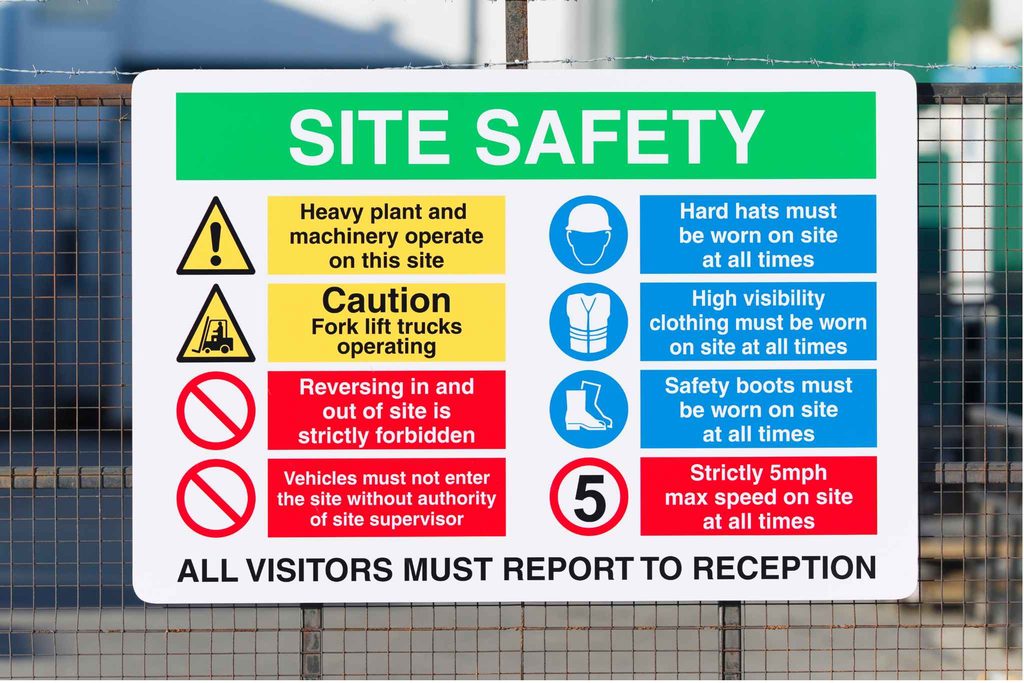
Every construction site changes from day to day, which means the risks can change too. That’s why I believe daily pre-start checks and toolbox talks are an important part of construction site safety. Before work gets underway, crews should understand the day’s activities, specific hazards, control measures and any changes to site conditions. Safe Work Australia also highlights toolbox talks and pre-start meetings as practical ways to communicate with workers and raise awareness of safe work practices.
From my experience, these conversations work best when they’re specific to what’s actually happening on site, not simply another box to tick. Keeping everyone informed about new trades, changing access, high-risk activities or different work methods can help identify issues before they cause an incident or delay. That same emphasis on planning, coordination and risk management is something we bring to our commercial construction projects in Perth.
#4. Prevent Slips, Trips and Falls with Good Site Housekeeping
Good construction site housekeeping might sound basic, but it can make a big difference to site safety. I want walkways kept clear, waste removed regularly and tools and materials stored properly, particularly when working at height. Simple measures like securing loose materials, using toe boards and keeping access routes clear can help prevent slips, trips and falling-object incidents.
From my experience, a clean and organised site is usually a better-run site. Good housekeeping makes it easier for trades to move around safely, keeps work areas accessible and helps the project progress without unnecessary disruption. It’s part of the attention to planning and site management we bring to our commercial construction projects in Perth.
#3. Protect Construction Workers with the Right PPE
Hard hats, steel-cap boots, high-vis vests, eye/ear protection, and task-specific PPE (e.g., respirators for silica) must be worn at all times. The right personal protective equipment (PPE) is one of the basic lines of defence against injury. Hard hats, steel-cap boots, high-vis clothing and appropriate eye and hearing protection all have their place, but PPE also needs to match the task and the risks involved. For example, work involving silica dust may require suitable respiratory protection. Safe Work Australia provides further guidance on selecting, using and maintaining PPE.
From my experience, simply providing PPE isn’t enough. Workers need to understand when it’s required, how to use it correctly and why it matters. It’s one part of the broader safety, coordination and risk management that goes into running a professional commercial construction project in Perth.
#2. Have a Construction Site Emergency and Evacuation Plan
Ensure clear escape routes, working alarms, accessible first aid kits, trained first aiders, and site-specific emergency procedures are in place and practiced. First aid equipment and trained first aiders also need to be readily available. Safe Work Australia provides guidance on preparing, maintaining and testing emergency plans for construction workplaces.
For me, having an emergency plan on paper isn’t enough. Your team needs to know exactly what to do when something goes wrong. That means keeping evacuation routes clear, making sure workers know their assembly points and regularly testing procedures as site conditions change.
#1. Identify and Control Construction Site Hazards Before Work Begins
For me, construction safety starts before the first tool comes out. Before work begins, we need to identify the construction site hazards, assess the risks and put the right controls in place. That could mean eliminating a hazard altogether, separating people from high-risk activities, changing how work is carried out or introducing engineering controls. Safe Work Australia recommends this same approach: identify hazards, assess the risks, implement controls and regularly review whether those controls are working.
That also includes looking beyond the workers on site. A construction site needs to be properly secured so members of the public can’t accidentally enter hazardous areas. Depending on the project, that can include secure perimeter fencing, controlled entry points, warning signage and isolating excavations, plant and other hazards. SafeWork NSW’s site security checklist is a useful reference for keeping construction sites secure and preventing unauthorised access.
In my experience, the earlier you identify a risk, the easier it is to manage it properly. Good construction site safety isn’t about reacting when something goes wrong; it’s about thinking ahead, planning the work properly and making sure the right controls are in place before anyone is exposed to the hazard.
Build Safer from the Start
Construction site safety starts well before work begins. Identifying hazards early, planning the right controls, and making sure everyone understands their responsibilities can help prevent serious incidents and keep a commercial construction project running smoothly.
When you’re comparing commercial builders, price, experience and timelines naturally matter. But I’d also look closely at how the builder approaches construction site safety. Ask how risks are identified before work begins, how subcontractors are managed, what happens when site conditions change and how safety procedures are communicated to everyone involved.
Planning a commercial construction project in Perth or WA? Contact Chest Constructions to discuss how we can help deliver your project safely and professionally.
Frequently Asked Questions
What are the most common safety hazards on a construction site?
Common construction site hazards include working at heights, moving vehicles and mobile plant, electrical hazards, slips and trips, falling objects, hazardous substances and unsafe use of tools or equipment. The specific risks will vary depending on the project and the work being carried out.
Who is responsible for construction site safety in Australia?
Work health and safety responsibilities can apply to multiple parties involved in a construction project, including persons conducting a business or undertaking (PCBUs), principal contractors, subcontractors and workers. Safe Work Australia provides guidance on WHS duties within the construction industry.
What is a SWMS in construction?
A Safe Work Method Statement (SWMS) is a document required for high-risk construction work under applicable WHS laws. It identifies the high-risk work being performed, associated hazards and risks, and the measures that will be used to control those risks.
Is a White Card mandatory for construction workers in Australia?
Workers who carry out construction work generally need to have completed general construction induction training and hold the required construction induction card, commonly known as a White Card. Requirements and administration can vary between Australian states and territories.
What should I look for when choosing a safe commercial builder?
Look beyond whether a builder simply has safety documentation. Ask about their risk management processes, site inductions, SWMS, subcontractor management, toolbox talks, emergency procedures and how they respond when conditions change during construction. A good safety culture should be visible in how the entire project is planned and managed.
Why is construction safety important for the client?
Construction safety is first and foremost about protecting workers, visitors and the public. For clients, strong site safety and risk management can also contribute to a better-organised project by reducing the likelihood of incidents, unexpected stoppages and avoidable disruption.